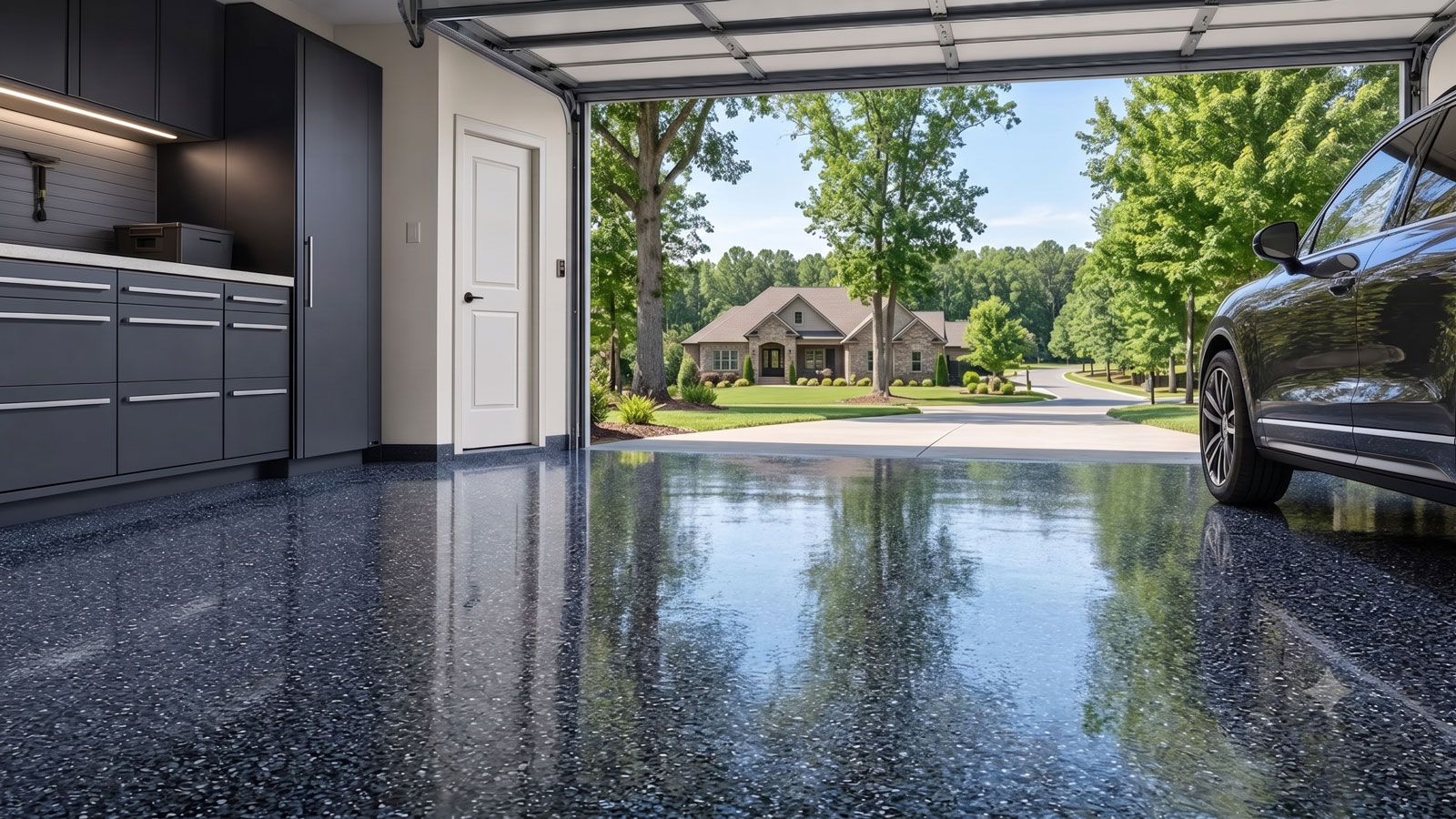
Garage Floor Coating in Lawrence, MA
Floor Coating Services in Lawrence, MA
Lawrence, Massachusetts, has a garage-floor context shaped by a dense historic mill city along the Merrimack and Spicket Rivers. Its comprehensive planning and redevelopment work addresses old industrial corridors, housing rehabilitation and streets where detached garages or later concrete repairs may be common. The city's historic Lawrence Heritage State Park and mill district document an older urban building landscape, but the age of a residence does not necessarily date the garage slab. An older rear structure might have fresh concrete; a more recent floor can still carry sealers or previous paint.
Water and winter are distinct local factors. The Spicket River links Lawrence and Methuen, and a formal nine-element watershed-based plan was approved in May 2024. Lawrence also participated in Lower Shawsheen watershed work in 2024. Such plans investigate pollutants and runoff across large areas, not whether one private garage has moisture problems. Actual doorway grade, roof drainage, stains and concrete dampness require a property inspection.
An epoxy, polyaspartic or decorative-flake system can make sound, prepared concrete easier to clean. It should follow removal of old paint and contamination, evaluation of cracks and joints, and attention to access. A decorative coating cannot replace drainage correction or repair of unstable concrete.
Local Market Insight
Lawrence lies between Merrimack Valley waterways, with the Spicket River watershed plan approved in May 2024 and Lower Shawsheen planning in the same year. Its older mill-city building stock and compact garages make surface history and real water routes particularly relevant.
What Affects the Cost of Garage Floor Coating in Lawrence?
An established Lawrence rear garage can require stripping, patch repairs and difficult equipment access, while a later attached floor may mainly need builder-film removal and control-joint treatment. Square footage is not the whole labor estimate.
Watershed pollution studies cannot diagnose private moisture. A quote should distinguish exterior water entry, actual slab suitability, grinding, repairs, finish layers and winter return-to-service timing.
- Historic urban building changes: Lawrence's older residential and mill-area properties may have garages added or repoured separately from the house. Inspect concrete textures, patched sections and surface wear.
- Old paint, oil and residue: Long-used parking floors can carry paint, oils and industrial-era garage-use residue, but contamination must be verified on site. Strip interfering films and mechanically profile sound concrete.
- Spicket and Shawsheen context: Regional watershed studies address water quality rather than a home's floor. Check driveway fall, threshold stains, gutters and any persistent internal dampness directly.
- Cracks and winter wear: Door-edge spalling, stable cracks and moving joints require different remedies. Include real repair scope and do not cover deterioration that needs structural assessment.
- Compact lot and alley access: Back-lot garages, narrow gates, steps and storage can increase grinder movement and perimeter work. Quote equipment staging and waste handling rather than area alone.
- Deicing cleanup and coating schedule: Salt, grit and melting snow affect cleaning and wet traction. Confirm layers, permissible application temperatures and manufacturer-based return-to-parking instructions.
Call for a clear, project-specific estimate — or request one online.
Lawrence's Mill-City Legacy and the Concrete Actually in a Garage
Lawrence's historic development along the Merrimack River created a dense industrial city with old mill complexes, established housing and limited urban lots. That history is a specific local context for renovations, but it does not prove that any particular garage floor contains old industrial contamination or dates to the nineteenth century. Garage buildings and slabs can be added or replaced many decades later.
At a residential property, an older rear garage may contain paint, oil and several patches. Another might have received new concrete during an addition. A more recent floor can still have clear curing compounds or a poorly bonded previous coating. Look at the actual surface for differing slab textures, cracks, joints, weakened entrance edges and possible moisture before specifying epoxy or polyaspartic.
A compact lot can affect the work more than the coating area suggests. Access for grinding equipment, disposal, nearby parked cars, alley clearance and garage contents can all add labor. Ask whether the estimate covers old-film removal, profiling, stable repairs, edges and joint treatment.
After the concrete is assessed, the finish can be chosen for cleaning, texture and expected use. A decorative flake system does not make moving concrete stable or turn failed paint into a sound bonding surface. In Lawrence, the correct history to understand is the history of this garage slab, not simply the history of the city.
Spicket River Planning, Shawsheen Studies and Winter Water at the Door
The Spicket River links Methuen and Lawrence, and the state lists a watershed-based plan approval dated May 23, 2024. Lawrence also joined neighboring communities in developing a Lower Shawsheen plan that year. These are concrete public examples of concern over runoff and water quality, but they do not establish floodwater or vapor issues inside individual garages.
Walk the property's water route during rainfall. On a compact city lot, a downspout or paved courtyard may send water directly toward the overhead door. Indoors, old paint blisters, stains and dark patches may call for concrete moisture investigation. Water that flows across a threshold is different from vapor moving through the slab and different again from slush carried inside by a parked vehicle.
Lawrence winters bring deicing residue, sand and melting snow onto floors even far from the rivers. A properly bonded continuous coating may simplify cleaning, but homeowners still need to sweep grit and remove puddles. Texture matters for wet shoes and tires, particularly at a frequently used household entry.
If outside water entry is ongoing, correct that before coating. If slab moisture is suspected, evaluate it according to the product system. Then specify cleaning, grinding, repair of stable defects, joints, decorative layers and realistic vehicle-return time. The local river plans should generate relevant questions, not unsupported claims about every garage.
Frequently Asked Questions
Does Lawrence's mill history mean my garage slab is contaminated?
No. Citywide industrial history is not evidence about a private garage. Inspect actual oils, films, repairs and concrete condition before assigning removal or other work.
Do the 2024 river watershed studies prove my garage is damp?
No. The Spicket and Shawsheen efforts address regional water quality. The property's driveway, threshold, roof drainage and slab should be assessed directly.
Can a floor coating prevent water entering an alley garage?
No. Exterior drainage, paving pitch or threshold correction may be necessary. Coating only follows suitable substrate conditions and control of active water entry.
What should a Lawrence garage-coating estimate include?
Ask about old paint removal, mechanical grinding, stable crack repairs, joints, equipment access, moisture evaluation where warranted, full layers, finish traction and parking-return instructions.
Will a coated floor eliminate salt and sand cleanup?
No. It may make residue easier to sweep or rinse, but winter grit, salty meltwater and standing liquid should still be cleaned regularly.
Lawrence Neighborhoods & Local Context
Phone Quote Line
Speak with a floor coating professional about your project and get a realistic planning range.
(978) 800-7177Typical Project Cost
$3,000–$5,500
Planning range for a typical two-car garage. Final pricing depends on floor size, concrete condition, preparation, coating system, decorative broadcast, edge details, and site logistics.